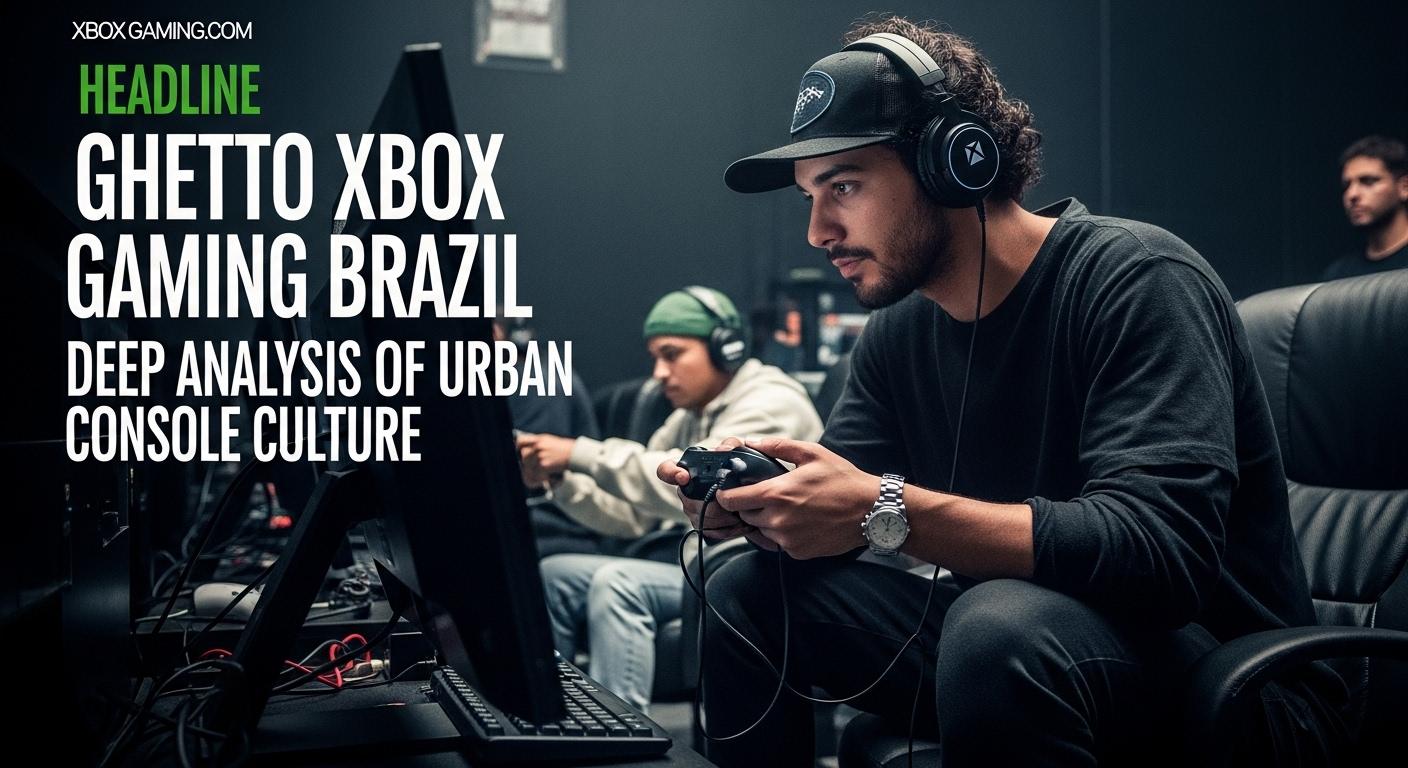
Across urban Brazil, the ghetto Xbox Gaming Brazil scene has emerged as a revealing lens on how communities negotiate access, culture, and aspiration within a constrained market. This deep-dive analyzes drivers, barriers, and emergent behaviors shaping console gaming beyond glossy press releases.
Setting the stage: Brazil’s Xbox footprint and urban gaming
In many Brazilian cities, Xbox presence is not simply about official sales tallies; it is a mosaic built from local shops, second-hand markets, and community hubs where players share tips, trade games, and celebrate small wins. Price sensitivity remains a defining constraint: import logistics, tariffs, and currency volatility push families toward refurbished consoles, used games, and flexible payment options. Digital storefronts and Xbox Game Pass have lowered some barriers, but the equation still centers on affordability, timing, and local networks. The resulting ecosystem often classifies participants into tiers: those with steady access to consoles and data, and those navigating intermittent connectivity or limited equipment. Taken together, these dynamics shape who shows up to play, what they play, and how long they stay engaged. The label ghetto Xbox Gaming Brazil, then, signals more than a subset of players; it signals a social field where culture, access, and resilience intersect in real time.
From hardware costs to digital access: friction points for Brazilian players
Hardware affordability remains the most visible gatekeeper. Even as local retailers offer bundle deals and installments, the upfront cost of a console paired with a year of online services can stretch family budgets. This pressure is compounded by data costs in mobile and home environments, where streaming games or downloading titles competes with other essential needs. Digital access—while a potential equalizer—also introduces a dependency on reliable internet, stable power, and consistent service. For many households, the decision to subscribe to a Game Pass tier or to buy a particular title hinges on perceived value, school or work routines, and the cadence of local promotions. In parallel, there is a vibrant secondary market for consoles and accessories that extends the lifecycle of machines long past their official warranty, a practice that keeps the scene active despite macroeconomic headwinds. The result is a gaming culture that negotiates scarcity with creativity, often prioritizing multiplayer experiences that emphasize community and shared timing over cutting-edge hardware alone.
Cloud streaming as turning point: how improved tech reshapes the landscape
Cloud streaming has the potential to dilute hardware constraints by shifting the focus to bandwidth and latency rather than outright device power. Recent reporting indicates improvements in cloud streaming quality for Game Pass Ultimate, which can expand access for Brazilian players who cannot afford the latest consoles or who rely on mobile devices. When cloud performance improves, players in densely populated urban areas may experience smoother co-op sessions, quicker onboarding for newcomers, and more frequent trial periods that lower the risk of a long-term commitment. Yet cloud gaming also introduces new dependencies: data caps, network congestion during peak hours, and the need for dependable connectivity. The net effect is nuanced. On one hand, cloud streaming can democratize access, enabling more friends to join a party from a wider array of devices. On the other hand, where infrastructure lags, it can create new bottlenecks that re-center advantage among those with better networks. The emerging pattern suggests a cautious optimism: cloud improvements will accelerate participation in ghetto Xbox Gaming Brazil, but only if accompanying policies and infrastructure keep pace with user expectations.
Communities and the urban ethos: co-ops, creators, and cultural exchange
Beyond hardware and networks, the social fabric of ghetto Xbox Gaming Brazil is sustained by local cooperatives, informal leagues, and content creators who translate global titles into local experiences. The mash-up of co-op chaos, street culture, and music—seen in urban art-inspired communities—illustrates how gaming becomes a canvas for expression, entrepreneurship, and mutual aid. Local groups often organize in-school tournaments, neighborhood centers, and online forums that prioritize inclusivity, mentorship, and shared resources. In this milieu, gameplay is as much about strategy and teamwork as it is about storytelling, fashion, and music, creating a layered cultural phenomenon that resonates with young audiences across Brazil. This dynamic underscores a broader lesson for the global Xbox ecosystem: adaptive community models built on trust and reciprocity can sustain long-term engagement in markets where formal penetration remains uneven.
Actionable Takeaways
- Promote affordable access through bundled hardware and flexible payment options to broaden entry points for first-time players in urban Brazilian communities.
- Invest in local partnerships with community centers and school programs to facilitate safe, organized play and mentorship around Xbox activities.
- Leverage improved cloud streaming to reach players without high-end hardware, while advocating for better data pricing and network reliability in public and private networks.
- Support grassroots content creators and co-ops that translate global titles into locally relevant experiences, reinforcing cultural relevance and sustainability.
- Monitor and adapt to the secondary market for consoles and accessories, ensuring legitimate access channels and warranties for first-time buyers.