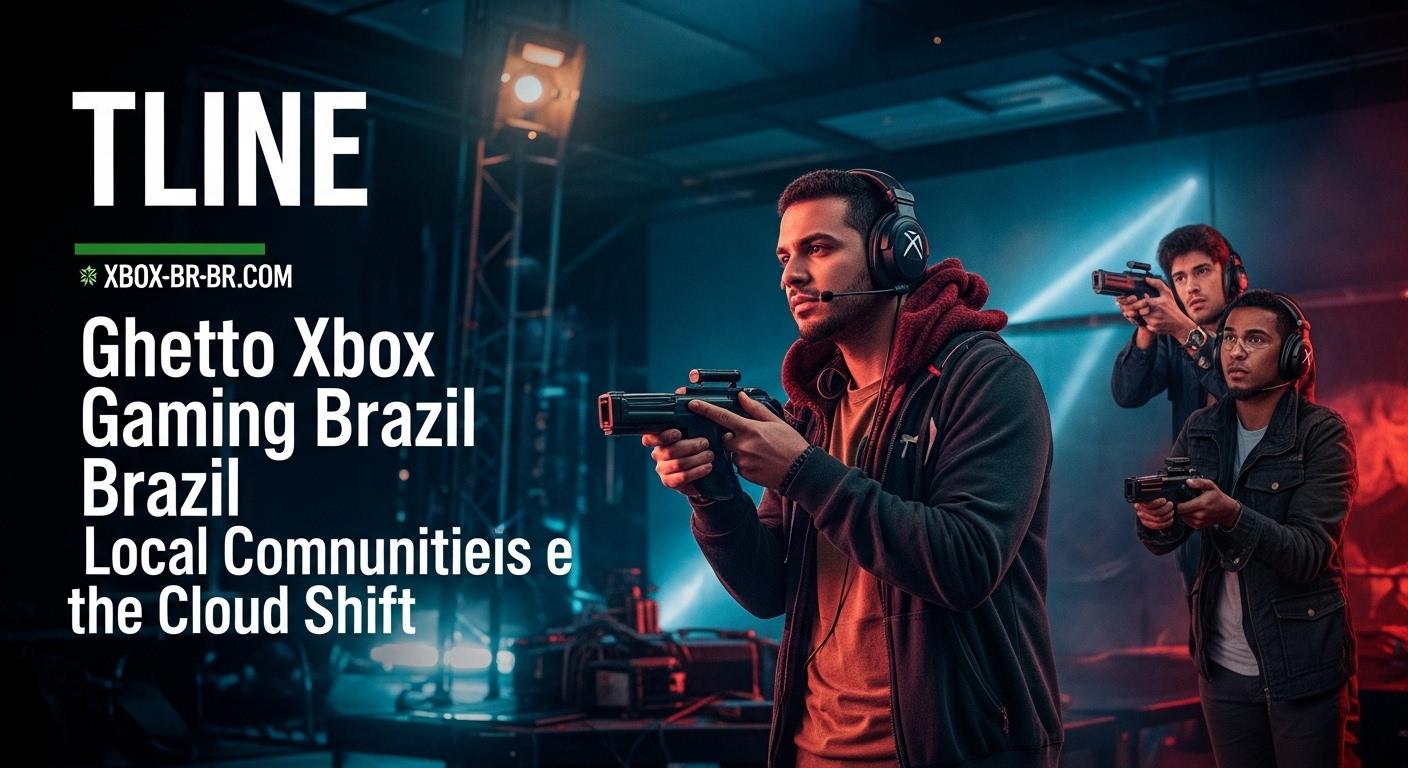
Across Brazil, the phrase ghetto Xbox Gaming Brazil isn’t just a provocative label; it’s a lived experience at the intersection of urban culture, budget realities, and a stubborn belief that play should travel beyond a storefront. This analysis examines how grassroots groups, neighborhood networks, and new consumption models are coalescing around Xbox in Brazil. From improvised LAN sessions in community spaces to a cloud-based promise that can bypass expensive hardware, Brazilian players are stitching together an ecosystem that challenges stereotypes and redefines what it means to game on an Xbox in a developing market.
Market Shifts: The Growth of Local Gaming Communities
Brazilian gaming ecosystems have long thrived on social fabric as much as on silicon. In major cities and in smaller municipalities alike, informal gatherings—often hosted in community centers, schools, or even apartment lounges—become testing grounds for new titles, matchmaking norms, and local leadership among players. These groups mobilize around Game Pass and Xbox titles that travel well across devices, enabling friends to play cooperatively without each person bearing the full cost of a new console. The consequence is a distributed network of micro-communities that sustains interest between splurges on hardware and the monthly cadence of subscriptions. The result: a more resilient local market where trust in shared tools, not only individual devices, anchors ongoing engagement.
From a practical standpoint, this growth is anchored in social capital. Players mentor newcomers, translate patches and updates into local workflows, and negotiate group purchases or gift-card strategies that reduce upfront spending. The social logic mirrors other consumer ecosystems in Brazil, where friendship networks often determine access to high-demand tech. But the Xbox ecosystem adds a distinctive twist: it emphasizes subscription flexibility and cross-device continuity that align well with a price-conscious audience and varying home internet setups. The upshot is a more inclusive form of participation, where community norms compensate for uneven hardware replacement cycles and limited repair options.
Infrastructure, Access, and the Cloud Frontier
Cloud gaming has landed in a way that could recalibrate the Brazilian Xbox experience. The cloud promises to lower hardware barriers, letting players start with modest devices while streaming games that were once tethered to expensive consoles. Recent reporting from industry outlets highlights ongoing improvements in cloud streaming quality for Game Pass Ultimate, a development that Chile, Brazil, and other regions watch closely as data networks expand and data caps become more manageable for many users. In Brazil, where mobile data plans are widespread and fixed broadband remains uneven in depth and cost, cloud gaming is not just a novelty—it is a pragmatic path to broader access. However, the reality remains nuanced: reliable connectivity, acceptable latency, and consistent data pricing are prerequisites for a truly democratized cloud experience. The pace of rollout, device compatibility, and regional pricing will shape how widely cloud streaming translates into durable, day-to-day gaming for Brazilian players.
Observers note that cloud capabilities could also shift the calculus of ownership. A household might subscribe to a Game Pass tier and rely on a mix of smartphones, tablets, and low-cost laptops to run a growing library of titles. In that sense, cloud gaming reinforces a pragmatic approach to entry: you invest in software and network, not necessarily in a premium box every few years. This aligns with how local communities already optimize resources and share access—turning individual constraints into collective solutions. Yet, cloud gaming is not a cure-all. It depends on stable networks, local capacity upgrades, and continued investment in regional data infrastructure to prevent bottlenecks that could undermine the experience for everyone involved.
The Cultural Thread: Ghetto Xbox Gaming Brazil and Shared Play
The cultural dimension of ghetto Xbox Gaming Brazil is not only about affordability; it is about identity, collaboration, and shared storytelling. In urban playlists and graffiti-adorned spaces, gaming becomes another medium through which communities narrate themselves—turning competition into collective memory and turning collaboration into community resilience. Shared play—whether in split-screen co-op on a single TV, online co-op across distant rooms, or weekly community tournaments—emerges as a vehicle for social cohesion. For many Brazilian players, the Xbox is less a single-player machine than a shared platform where stories are exchanged, strategies are crowdsourced, and victories are celebrated in a shared language of play. This cultural current matters because it influences game selection, participation rates, and the way players discuss patches, updates, and new releases.
At its core, the ghetto Xbox Gaming Brazil phenomenon is about adaptation. It is the art of making do with what is available while still imagining ambitious futures—dreams of local tournaments, streaming highlights, and even grassroots content creation that could feed into a broader Brazilian esports scene. While some observers might read this through a lens of urban grit, the more nuanced view is that these communities are building social infrastructure in real time: mentoring newcomers, cataloging local preferences, and shaping a consumer culture that prizes access and resilience over spectacle alone. In this frame, the console becomes a node in a larger network of neighborhood pride and practical entrepreneurship, not merely a toy for leisure.
Policy, Pricing, and Practicality for Brazilian Players
Economic realities shape every decision in this space. Price gaps between regional Game Pass offers, hardware costs, and regional taxes influence how Brazilian players prioritize subscriptions, hardware refresh cycles, and game purchases. In practice, many families and youth groups combine informal arrangements with official channels to stretch budgets. Digital distribution, regional pricing, and the availability of affordable bundles can mitigate some of the cost barriers, but players also navigate data costs and latency considerations when streaming games. The policy question for Microsoft and regional distributors is how to sustain growth without creating new disparities between urban centers and more remote communities. The local demand signal is clear: as the cloud and subscription models mature, players will continue to test the balance between ownership, access, and ongoing cost. The risk to equity lies in inconsistent network performance, which could tilt advantage toward households with better connectivity and leave others behind. The practical path forward is to align pricing, regional offers, and network investments with the realities of Brazilian consumers who are already improvising sophisticated access models within constrained budgets.
Actionable Takeaways
- Leverage Xbox Cloud Gaming where available to reduce upfront hardware costs while maintaining access to a growing library.
- Engage with local gaming communities to share resources, organize group purchases, and coordinate access to subscriptions.
- Monitor regional Game Pass pricing and promotions to maximize value, especially for multi-title bundles and seasonal offers.
- Explore data-friendly play strategies, including game selection that scales well on mobile and lower-bandwidth connections.
- Support and participate in community-led events and content creation to help build a sustainable ecosystem around Xbox in Brazil.