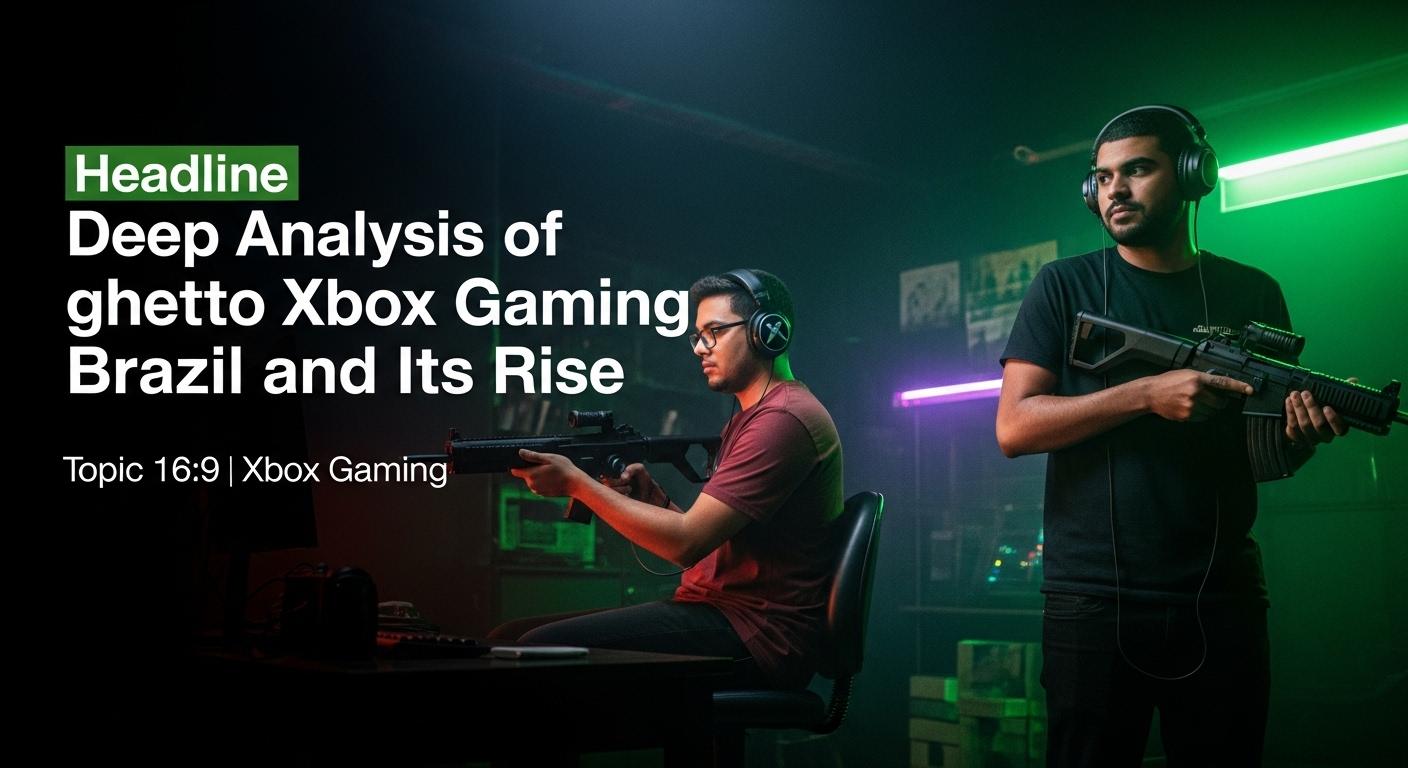
Brazilian gamer family playing Xbox in a colorful room with graffiti backdrop
Updated: April 21, 2026
ghetto Xbox Gaming Brazil is not a label to sensationalize risk; it is a lens into how players in Brazil navigate a fragmented hardware and software landscape, where access, latency, and community enthusiasm drive creative play and informal economies. This analysis explores how localized dynamics shape player behavior, content creation, and the potential trajectories of Xbox in Brazil.
Context and the Pulse of ghetto Xbox Gaming Brazil
In major markets, Xbox ecosystems emerge from official pricing and stable infrastructure; in Brazil, the picture is more layered. Many households balance family budgets, frequent promotions, and rotating consoles borrowed within neighborhoods. The result is a living culture—not just a game library but a shared space where streams, guides, and mods circulate through local networks. The narrative here is less about one big release and more about a continual, crowd-sourced rhythm of play, adaptation, and risk-taking as players test cloud gaming, offline installs, and resilient workarounds against outages. The environment also reflects government, carrier, and retailer policies that shape what is practical for most players rather than what is technically possible in a lab. The dynamics create a feedback loop: higher perceived value of local play increases participation, which in turn pressures retailers and service providers to refine regional offerings.
Economics, Access, and Platform Decisions
Brazilian gamers face a layered cost structure: console price points, game prices in BRL, and subscription costs that can differ dramatically from other regions. Even when promotions appear online, regional taxes, import duties, and warranty considerations complicate the economics of ownership. In this milieu, Xbox Game Pass variants, Core and Ultimate, become central to how many players frame value. Cloud-based options, when available, offer a potential workaround for hardware constraints but come with requirements for stable bandwidth and low latency. Platform decisions—whether to buy new hardware, pursue refurbished devices, or lean into digital libraries—are often narrated by local creators who translate global announcements into Brazil-specific implications. The result is a pragmatic calculus: what saves money over 12 months, what preserves access to friends and ranked queues, and what preserves the possibility of picking up a game next month without breaking the budget.
Community, Modding, and Regional Playstyles
Beyond raw numbers, the community fabric matters. Brazilian players frequently rely on peer guides, regional leagues, and localized content to stretch a game’s value. This is visible in how players share quick-start tutorials, adjust accessibility settings for slower connections, and organize informal co-op gatherings in neighborhoods and streaming spaces. While modding remains a complex topic with legal and technical boundaries, the broader trend is toward community-based optimization: optimizing storage, streaming, and shareable experiences that minimize friction for first-time players. The social texture—stream voices, translated captions, and live chats in Portuguese—shapes what games feel like when you are part of a decentralized, city-scale network rather than a singular living room experience.
Future Scenarios for Brazil’s Xbox Scene
The road ahead for Brazil’s Xbox ecosystem will be defined by a mix of policy clarity, service flexibility, and infrastructural expansion. If cloud gaming gains more stable bandwidth and data plans become more affordable, streaming Xbox titles could reduce the upfront hardware barrier and broaden the audience in peri-urban areas. Conversely, economic volatility and currency fluctuations could amplify reliance on second-hand markets and family sharing arrangements. Private partnerships, regional promotions, and localized storefront support could tilt the balance toward more inclusive access, while official warranty channels and regional customer service will influence trust in long-term adoption. In any scenario, the intersection of cultural practice, economics, and technology will determine how quickly the ghetto Xbox Gaming Brazil scene migrates from a collection of hobbyists into a more mainstream, sustainable ecosystem.
Actionable Takeaways
- Evaluate total cost of ownership over 12 months, including console, games, and a chosen Xbox Game Pass tier, tailored to Brazilian pricing and promotions.
- Consider regional bundles and authorized resellers to maximize warranty protection and service access within Brazil.
- Engage with local communities and content creators to discover tips for optimizing performance on slower networks and for streaming.
- Monitor official announcements for Brazil-specific promotions and regional pricing adjustments, as these can shift value quickly.
- Balance hardware upgrades with cloud or digital options to maintain game access without overextending the budget.
Source Context