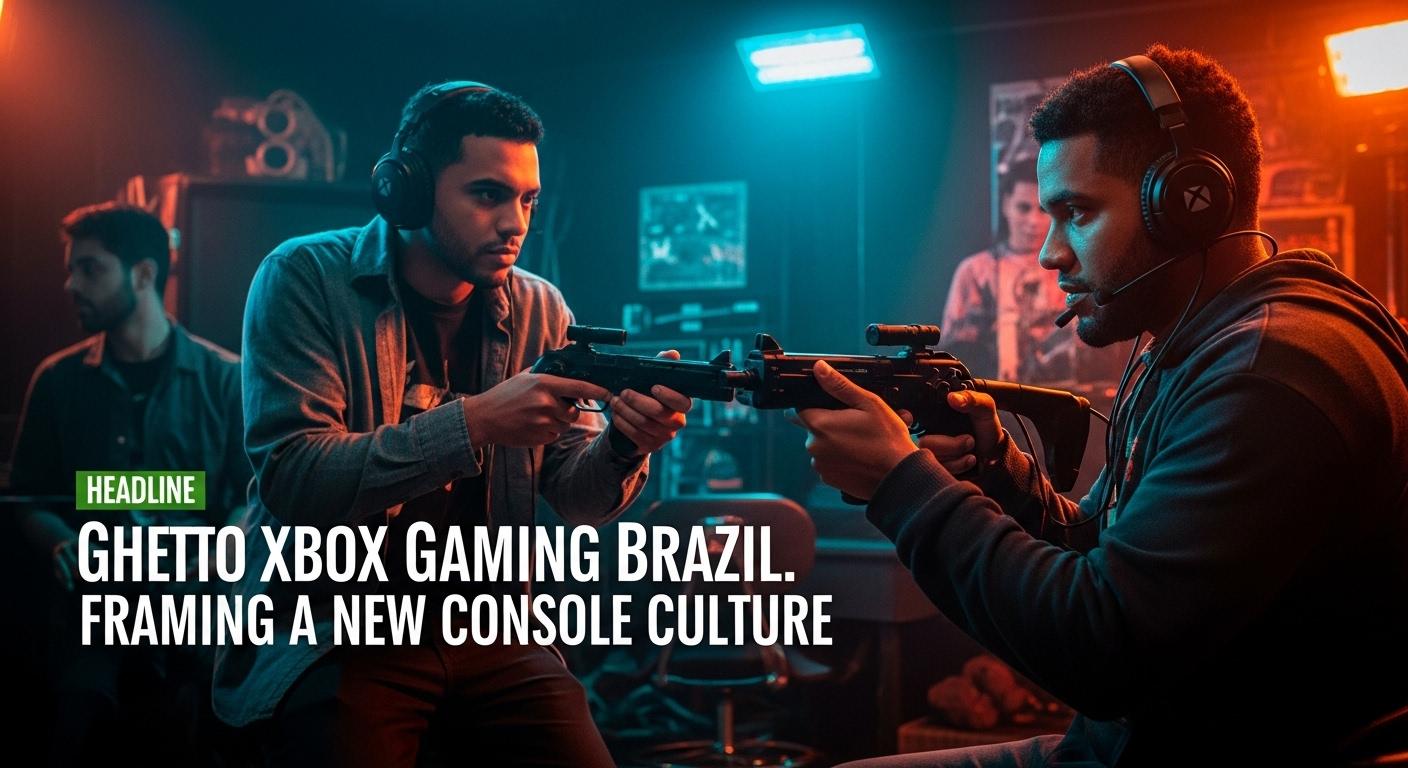
Brazilian Xbox gamers in an urban, graffiti-filled environment gathered around a console.
Updated: April 19, 2026
Brazil’s Xbox scene has long lived in the shadows of broader entertainment conversations, yet the phrase ghetto Xbox Gaming Brazil has emerged to describe a resilient, resourceful subculture where players optimize aging hardware, public networks, and a distinctly Brazilian vibe to chase console-based play. This report offers a deep-dive into how that dynamic reshapes access, community, and opportunity across the country.
The Context: ghetto Xbox Gaming Brazil and local culture
Across major cities and lesser-known towns alike, players repurpose old consoles, share firmware tweaks, and gather in makeshift living rooms or community centers to keep play going. The ghetto Xbox Gaming Brazil phenomenon sits at the intersection of urban culture, music, street art, and shared digital rituals. It is not merely about hardware limits; it is about leveraging social networks to extend the life of a single box and a single night of gaming into something communal and aspirational. Some participants insist the term captures a resilience born from scarcity, while others warn that labeling can gloss over structural barriers faced by players in different regions. Either way, the pattern reveals a regional logic: value is created through collaboration, improvisation, and a stubborn commitment to play, even when supply chains and prices raise the entry bar. In this sense, the Brazilian scene resembles other localized gaming ecosystems where communities stitch together hardware, access, and culture to sustain a shared hobby.
Analytics-friendly language aside, the real story is lived experience. Players narrate their sessions in a language of shortcuts, memes, and neighborhood pride, while developers and publishers increasingly notice that Brazilian players respond not just to new titles but to community events, local language support, and affordable access models. The ghetto framing, controversial as it may be, underscores a larger social truth: gaming in Brazil is not a solitary pursuit but a distributed practice that travels through friends, lana houses, and school corridors, often with a mobile-first mindset and a high tolerance for technical workaround. In that sense, the phenomenon is less about a single demographic and more about a shared ethos of making do, sharing, and sustaining an Xbox experience across uneven terrains of connectivity and income.
Accessibility and Infrastructure in Brazil
Access to Xbox gaming in Brazil operates within a complex matrix of hardware prices, service costs, and internet reliability. In many regions, high-speed fixed broadband remains scarce or expensive, while mobile networks—crucial for overlays of cloud gaming, social sharing, and live streams—vary widely in quality. For communities already operating on tighter budgets, this translates into a strategic mix: invest in durable but older consoles, rely on local co-ops for storage and power management, and prioritize titles and services that travel well across networks. The rise of cloud streaming offers a potential equalizer, but its impact depends on local latency, data caps, and the feasibility of stable connections in urban peripheries. Industry observers have highlighted improvements in cloud streaming quality for Game Pass Ultimate in some markets, yet the Brazil-specific trajectory remains uneven, with urban centers benefiting more quickly than remote towns. The practical effect is a patchwork where some players experience near-console parity through cloud play, while others still contend with download-heavy routines or shared screens to stretch hardware.
From a market perspective, price sensitivity drives many decision-making processes. Entry points like the Xbox Series S, second-hand markets, and bundled offers often determine who can participate in a broader subscription ecosystem. As publishers and platform owners continue to localize content and adjust bundles for regional realities, the Brazilian Xbox community adapts by trading tips on deals, sharing compatible accessories, and organizing informal events where players exchange knowledge about optimizing settings for local networks. The outcome is a gaming culture that values practical know-how as much as the latest releases, with community-driven support acting as a de facto warranty against hardware obsolescence and connectivity constraints.
Community, Content, and Local Innovation
Brazilian players are not passive consumers; they are organizers, curators, and storytellers. Local content creators mix gameplay footage with real-time commentary in Portuguese, weaving in regional humor and social narratives that resonate with fans across the country. Small-scale co-ops and LAN-style gatherings become incubators for skills—video editing, streaming setup, and even beginner-friendly tutorials—that translate into broader opportunities, from local sponsorships to community-led tournaments. This bottom-up energy helps diversify the audience for Xbox and strengthens the social fabric around gaming, turning living rooms into classrooms, studios, and showcases. The Brazilian scene also reveals a flexible approach to game selection: while blockbuster titles drive attention, indie titles, localized mods, and community-made playlists increasingly surface as sustainable, repeatable experiences. In this environment, a sense of shared ownership matters as much as performance metrics, and that dynamic is shaping how Xbox is perceived as a tool for social connection as much as a source of entertainment.
Policy and market dynamics further reinforce this local innovation. When hardware accessibility blends with community-led learning and affinity groups, players become mentors for new entrants, helping others navigate pricing, regional stores, and cloud options. The result is a virtuous cycle: more confident players raise the bar for collective activities, which, in turn, attracts more attention from creators and distributors. The Brazilian Xbox community, in this sense, represents a grassroots ecosystem where the value of play is distributed across people, spaces, and shared practices rather than concentrated in a single product launch or a high-profile streamer.
Actionable Takeaways
- For players and families: lean into Game Pass and cloud options where available, but pair digital access with local co-ops or gaming clubs to maximize value and social support. Prioritize bundles and refurbished hardware to stretch budgets without sacrificing core experiences.
- For retailers and distributors: recognize the price-sensitivity and regional variation within Brazil. Offer affordable bundles, extended warranty options for second-hand gear, and in-store demos that showcase cloud streaming performance on common devices.
- For developers and publishers: localize content in Portuguese, support lightweight or cloud-friendly game builds, and engage with Brazilian communities through regional events and creator partnerships to build long-term loyalty.
- For educators and libraries: consider gaming as a tool for digital literacy, coding exploration, and teamwork skills. Organize supervised play sessions that emphasize sharing, repair skills, and responsible online behavior.
- For policymakers and infrastructure planners: prioritize broadband expansion, stable power supply in public spaces, and affordable pricing strategies for consoles and services that promote inclusive access to gaming as a cultural activity.
Source Context
Contextual background for this analysis, drawn from industry coverage and reporting on related Xbox and streaming developments: